


Employee Retention Strategies: Why 85% of Small Businesses Get Benefits Wrong (And How to Fix It)
The average small business loses 40% of its employees every year. That's not just a statistic: it's a crisis that's bleeding your company dry, one resignation letter at a time.
Here's the harsh reality: while you're scrambling to fill open positions and train new hires, your competitors are building loyal, productive teams that stick around. The difference? They've cracked the code on employee retention strategies that actually work.
Most small business owners think retention is about offering competitive salaries and calling it a day. But research shows that's exactly where 85% of small businesses go wrong with their benefits approach. They're playing checkers while their competition plays chess.
The Hidden Cost of Getting Benefits Wrong
Before we dive into solutions, let's talk numbers. The cost of replacing an employee ranges from 50% to 200% of their annual salary. For a $50,000 employee, that's $25,000 to $100,000 in recruitment, training, and lost productivity costs.
Multiply that across multiple departures, and you're looking at hundreds of thousands in hidden expenses annually. Money that could have been reinvested in growth, better equipment, or: ironically: better retention strategies.
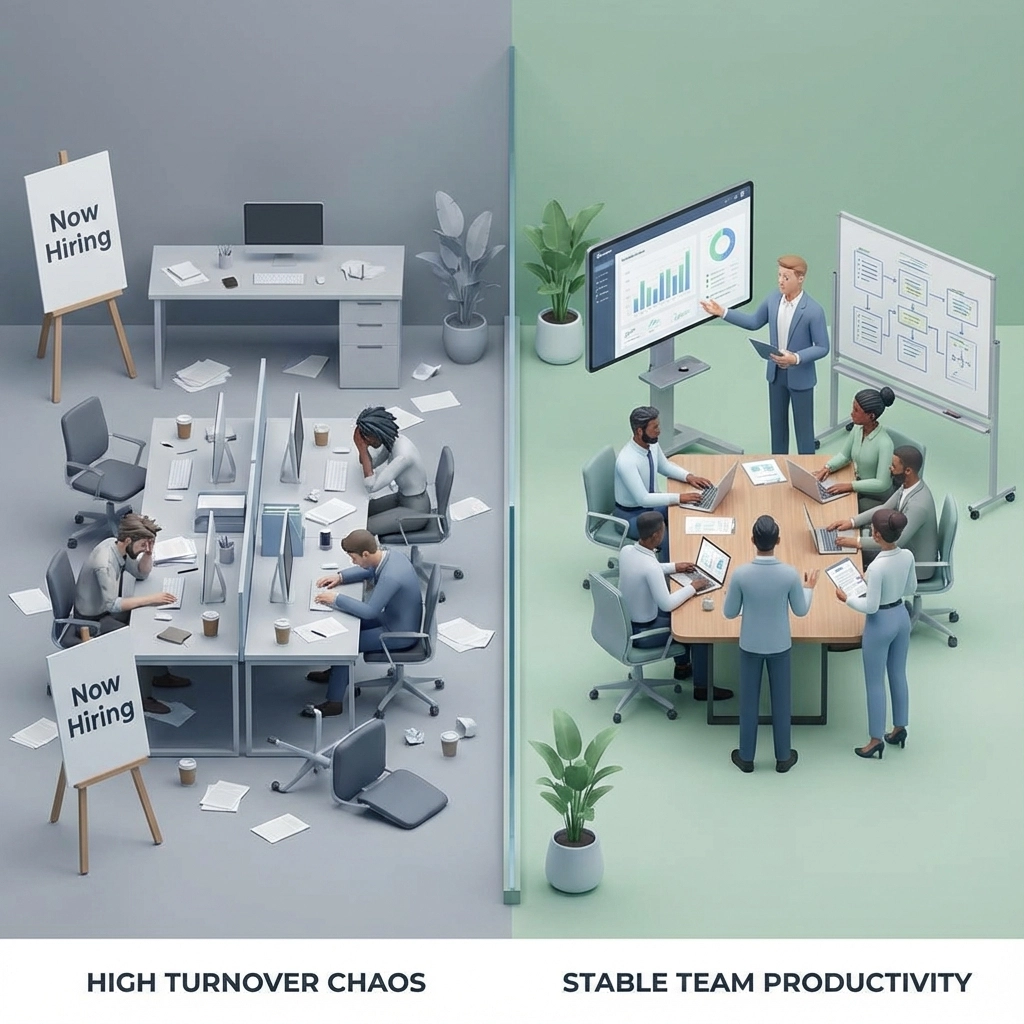
But the real cost isn't just financial. High turnover destroys team morale, overburdens remaining employees, and creates a reputation that makes attracting top talent nearly impossible. You end up in a vicious cycle: poor retention leads to overworked employees, which leads to more turnover.
The 5 Most Common Benefits Mistakes Small Businesses Make
1. The "One-Size-Fits-All" Benefits Trap
Most small businesses copy what larger companies do without considering their unique workforce. A 25-year-old software developer values different benefits than a 45-year-old operations manager with three kids.
The mistake: Offering generic benefits packages that don't match your team's actual needs and life stages.
The reality: Your millennial employees might prefer student loan assistance and flexible PTO, while your Gen X workers prioritize robust health insurance and retirement planning.
2. Ignoring Non-Monetary Benefits
Here's a shocking statistic: 94% of employees are more likely to stay with companies that invest in their career development. Yet most small businesses focus exclusively on salary and traditional health insurance.
The mistake: Assuming compensation is the only retention tool that matters.
The reality: Professional development opportunities, flexible work arrangements, and recognition programs often outweigh modest salary increases in employee satisfaction surveys.
3. Creating Internal Pay Disparities
Nothing destroys employee loyalty faster than discovering a new hire makes significantly more for the same work. This is especially damaging in small businesses where everyone knows everyone.
The mistake: Offering higher starting salaries to attract talent while neglecting existing employee compensation.
The reality: Employees take pay disparities personally, viewing them as a reflection of their worth to the company.
4. Failing to Communicate Benefits Value
Many small businesses offer decent benefits but do a terrible job explaining their value. Employees can't appreciate what they don't understand.
The mistake: Assuming employees automatically understand and value their benefits package.
The reality: A $60,000 salary with $15,000 in benefits should be communicated as $75,000 in total compensation.
5. No Benefits Evolution Strategy
Business needs change, employee expectations evolve, and market conditions shift. Yet many small businesses set their benefits package once and never revisit it.
The mistake: Treating benefits as a "set it and forget it" expense rather than a strategic retention tool.
The reality: Regular benefits audits and employee feedback sessions reveal changing priorities and competitive gaps.
How to Fix Your Benefits Strategy: The SMART Approach
S - Survey Your Team Regularly
Start with data, not assumptions. Conduct anonymous surveys every six months asking about:
Current benefits satisfaction
Most valued perks
Desired new offerings
Work-life balance preferences
Career development interests
Pro tip: Use simple tools like Google Forms or SurveyMonkey. The insights you'll gain are worth their weight in gold.
M - Make Benefits Personal
Create flexible benefits options that employees can customize based on their life stage and priorities. Consider offering:
For younger employees:
Student loan repayment assistance
Professional development stipends
Flexible PTO policies
Remote work options
For employees with families:
Dependent care assistance
Flexible scheduling
Additional parental leave
Health savings account contributions
For all employees:
Wellness programs
Recognition platforms
Career advancement pathways
Mental health resources

A - Align with Business Goals
Every benefit should serve a strategic purpose. Ask yourself:
Does this benefit help us attract the talent we need?
Will this improve productivity or reduce absenteeism?
How does this compare to what our competitors offer?
Can we measure the ROI of this investment?
R - Regularly Review and Adjust
Schedule quarterly benefits reviews with your team. Track metrics like:
Employee satisfaction scores
Turnover rates by department
Benefits utilization rates
Exit interview feedback
Market competitiveness
T - Transparent Communication
Create a comprehensive benefits guide that clearly explains:
Total compensation value
How to access each benefit
Eligibility requirements
Real-world examples of benefits usage
Beyond Benefits: A Complete Employee Retention Framework
While fixing your benefits strategy is crucial, employee retention strategies require a holistic approach. Here's your complete retention toolkit:
1. Career Development Investment
Offer specific growth opportunities:
Monthly one-on-one career conversations
Cross-training programs
Conference attendance budgets
Mentorship pairings
Certification reimbursements
2. Recognition and Appreciation
Implement both formal and informal recognition:
Peer nomination programs
Performance-based bonuses
Public acknowledgment in meetings
Personalized thank-you notes
Team celebration events
3. Work-Life Integration
Support employee well-being through:
Flexible scheduling options
Remote work policies
Compressed work weeks
Mental health days
Family emergency leave
4. Culture and Connection
Build a workplace people want to belong to:
Regular team-building activities
Open communication policies
Inclusive decision-making processes
Community service opportunities
Social events and celebrations

Implementation: Your 90-Day Action Plan
Days 1-30: Assessment Phase
Conduct employee satisfaction survey
Review current benefits costs and utilization
Research competitor benefits packages
Analyze recent exit interview data
Calculate current turnover costs
Days 31-60: Strategy Development
Design flexible benefits options
Create career development pathways
Develop recognition program framework
Draft updated employee handbook
Plan communication strategy
Days 61-90: Launch and Monitor
Roll out new benefits communication
Implement recognition programs
Begin regular career conversations
Track early adoption and feedback
Schedule first quarterly review
Measuring Success: Key Retention Metrics
Track these metrics monthly to gauge your retention strategy effectiveness:
Primary Metrics:
Overall turnover rate
Voluntary vs. involuntary turnover
Time to productivity for new hires
Employee satisfaction scores
Secondary Metrics:
Benefits utilization rates
Internal promotion percentage
Absenteeism rates
Employee referral rates
When to Seek Professional Help
Sometimes, the best employee benefits consulting comes from recognizing when you need expert guidance. Consider professional HR consulting for small business when:
Turnover exceeds 25% annually
Benefits costs are rising faster than revenue
You're struggling to compete for talent
Compliance requirements feel overwhelming
Employee satisfaction scores are declining
Professional consultants can provide objective analysis, industry benchmarking, and implementation support that saves time and prevents costly mistakes.
The Bottom Line: Retention Is a Strategic Investment
Fixing your benefits strategy isn't an expense: it's one of the highest-ROI investments you can make. Companies with engaged employees see 23% higher profitability, 18% higher productivity, and 12% better customer metrics.
The small businesses that master employee retention strategies don't just save money on turnover costs. They build competitive advantages through experienced teams, stronger company culture, and improved customer relationships.
Your employees are your most valuable asset. It's time to treat them like it.
Ready to transform your retention strategy? Contact DATC Consulting Group today for a comprehensive benefits and HR strategy assessment. Because your best employees deserve benefits that show you value them: and your business deserves the competitive advantage that comes with a loyal, engaged team.
Comments